YiFi Launches the Partner Portal: One Hub for Integrators, Traders, and KOLs!

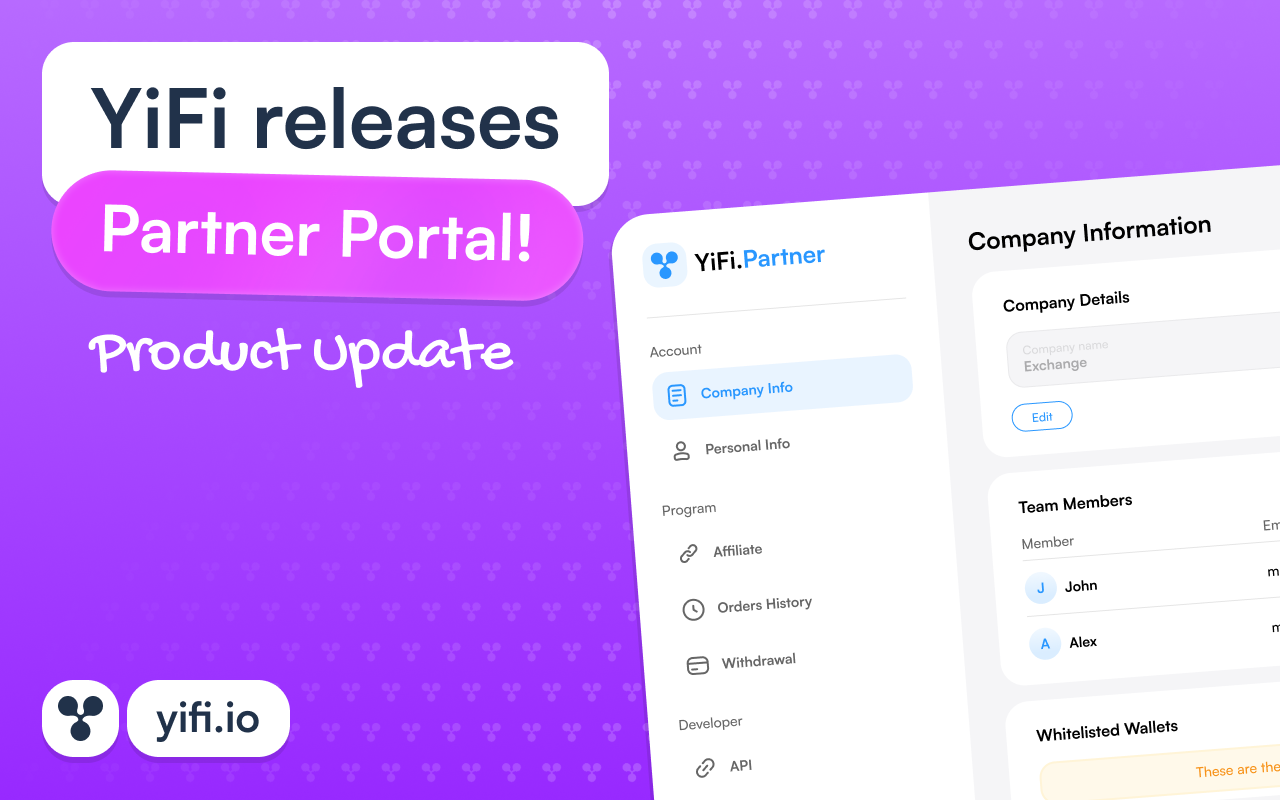
YiFi has launched the Partner Portal, a single dashboard for anyone building on top of YiFi’s swap infrastructure or earning from referring volume to it. The portal consolidates what previously would have required separate tooling for integrators, individual traders, and content creators into one hub: API key management, referral tracking, and performance data in a single interface.
The launch addresses a gap that shows up consistently across the swap-API category. Most providers split their partner tooling by use case: a developer dashboard for API integrators, a separate affiliate panel for referral-link partners, and often no clean path for a single trader or creator who wants API access without a full company account. The Partner Portal collapses that into one system with two account types, structured around how partners actually work rather than around internal product boundaries.
What’s Inside the Portal
Dashboard
The portal’s core view tracks referral swap volume, fees generated, active API keys, and performance data in one place. For a partner running an integration, this replaces what would otherwise mean cross-referencing multiple systems, an API management console for keys, and a separate reporting tool for volume and earnings, to get a full picture of how an integration is performing.
Company accounts
Built for integrators and teams, a company account supports up to five API keys and multiple team members under one account. This matters for any product with more than one environment, staging and production keys, for instance, or a team where more than one person needs visibility into integration performance without sharing a single login.
Individual accounts
A lighter setup for solo operators: one API key paired with a personal referral code, aimed specifically at traders and KOLs who want to generate and track referral links without needing the multi-seat structure a company account provides. This is a meaningfully different product than a typical affiliate panel, since it comes with actual API access, not just a link generator.
Why a Single Portal Design Matters
The split between “integrator” and “affiliate” tooling is common across the swap-API category, and it usually reflects how the underlying product was built rather than how partners actually operate. In practice, the line between an integrator and a referral partner isn’t always clean. A KOL who starts by sharing a referral link may later want to build a simple tool or bot around it. A small team that starts with a single API key for a side project may grow into needing multiple environments and teammates with their own access.
Structuring the portal around two account types, rather than two entirely separate products, means a partner doesn’t have to migrate to a different system as their usage grows. An individual account holder who wants to add a teammate or a second key later moves into a company account rather than starting over in unrelated tooling.
What This Means for Integrators
For a wallet, dApp, or trading bot embedding swap functionality, the practical benefit of the portal is visibility. Best-price execution across DEXs, CEXs, and private routes is available through a single API, which means an integrator doesn’t need to separately evaluate, integrate, and maintain connections to multiple liquidity sources to get competitive pricing for their users. That routing complexity sits behind the API; from the integrator’s side, it’s one integration surface.
Once live, the dashboard view gives an integrator ongoing visibility into how that integration is actually performing, referral swap volume, fees generated, and API key status, without needing to build internal reporting to reconstruct that picture from raw transaction logs. For a team evaluating whether a swap integration is working before investing further engineering time in it, having that data available from day one rather than needing to instrument it separately is a real reduction in setup work.
What This Means for KOLs and Individual Traders
For a creator or trader who wants to monetize an audience without building a product around it, the individual account path is the more relevant one. A personal referral code attached to a single API key covers the referral-link use case directly, while still leaving the door open to build something more custom later, a simple bot, a comparison tool, or a personal dashboard, without needing to apply for a different kind of account to get API access in the first place.
This is a different starting point than a standard affiliate program, where the partner typically only gets a tracking link and a payout dashboard, with no API access at all. Pairing referral tracking with actual API access from the start means the individual account tier isn’t a stripped-down version of the integrator product; it’s the same underlying access, scoped to a single key and a lighter account structure.
Getting Started
The Partner Portal is live now at yifi.io/partner. Setup differs slightly depending on account type: a company account is the right starting point for a team building a product integration with more than one API key or team member; an individual account fits a trader or content creator who wants a personal referral code and a single key to start.
For technical integration details once you’re in the portal, see the YiFi Swap API documentation. For a broader comparison of how commission and revenue-share structures work across the industry, see Best Crypto Affiliate Programs in 2026. For a deeper look at fee models and integration paths for developers specifically, see How to choose a crypto swap API.