Michael Saylor Highlights Yield Gap Between STRF and STRD

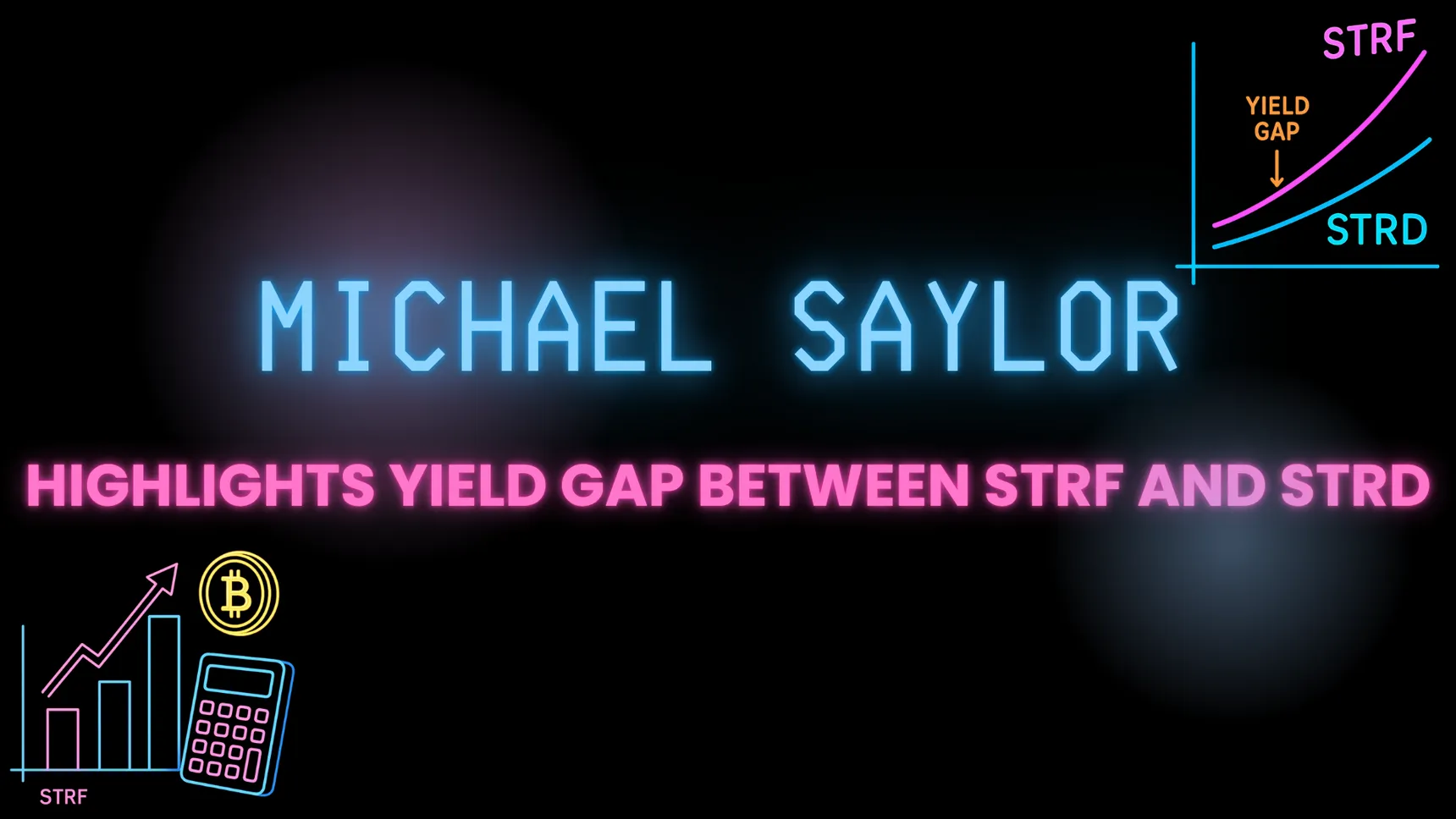
Michael Saylor is back talking yields—not Bitcoin memes. In a new CoinDesk markets piece published Oct. 20, the Strategy Inc (formerly MicroStrategy) executive chairman drew attention to a widening yield gap between two of the company’s exchange-listed preferred shares: STRF and STRD. Saylor questioned why the market has gravitated to the senior issue (STRF) when investors could capture more than 350 basis points of additional yield in the junior security STRD, given what he characterized as similar structures but different priority in the capital stack.
What are STRF and STRD?
Strategy (the renamed MicroStrategy) has built a small ecosystem of Bitcoin-backed preferred stocks this year, part of a larger funding strategy to keep accumulating BTC while offering income products to yield-oriented investors. The company’s own materials and third-party coverage describe STRF as a senior perpetual preferred with a 10% coupon designed for stability, while STRD is a junior perpetual preferred that pays a higher yield to compensate for lower payment priority. In practice, this means STRF dividends sit above STRD in the waterfall if things ever get tight.
Financial media tracking the rollout has repeatedly emphasized this senior-junior split. Barron’s reported that STRDlaunched with a 10% nominal coupon yet traded at discounts that pushed effective yields above 11% in early trading, while also noting that STRD dividends are non-cumulative and not mandatory, features typical of many preferreds but still important for risk assessment. STRF and a prior issue (STRK) were presented as higher in priority, with STRF even likened by Saylor to an “investment-grade-like” instrument (albeit unrated).
Why is there a spread at all?
According to CoinDesk’s reporting, the credit spread between STRF and STRD has opened up as investors price the different payout priorities (senior vs. junior) and the risk-return trade-off that brings. Saylor’s point is that, at current prices, the market may be overpaying for perceived safety in STRF while underpricing the additional income available in STRD—hence his public musing about the “over 350 bps” difference. Whether that’s mispricing or simply a rational preference for seniority depends on your risk tolerance and how you handicap Strategy’s cash flows.
How the preferred stack fits Strategy’s broader plan
This isn’t a one-off. Over the past several months Strategy has “built out its own yield curve” via multiple preferred tranches, offering coupons in the ~8%–10% area and, more recently, variable-rate features on new lines. The stated goal: attract different pockets of income investors (from conservative to yield-seeking) while avoiding common equity dilution and continuing the company’s long-running Bitcoin treasury strategy. CoinDesk’s July coverage framed the approach as a deliberate laddering of coupons/terms to target distinct buyer profiles.
Meanwhile, business wire items and market pages show the company operating under the Strategy Inc name and listing several tickers tied to these preferreds (STRK, STRF, STRD and later STRC). The rebrand underscores how centrally the bitcoin-treasury identity now sits in the corporate story.
What reputable outlets say about structure and risk
- Prospectus excerpts compiled by PreferredStockChannel describe STRD as a “10.00% Series A Perpetual Stride Preferred” with standard preferred features—useful as a quick reference to coupon mechanics and offering size. Always cross-read with the official prospectus on EDGAR before buying.
- Barron’s has repeatedly highlighted the trade-off: higher indicated yields than typical bank preferreds (often ~6%) in exchange for subordination, non-cumulative dividends, and crypto-linked exposure. It also points out that Strategy’s software business contributes limited free cash flow relative to aggregate preferred dividends, which is a key diligence item for income buyers.
- CoinDesk emphasizes the market behavior angle: as more preferreds list, investors are effectively setting a market-based term structure for Strategy’s credit risk, resulting in spreads like the one Saylor is calling out.
How income investors are likely to think about the 350bps gap
In preferred-stock land, a few levers drive the yield you see on screen:
- Priority in the stack. Senior preferreds (like STRF) should trade at lower yields than junior ones (like STRD), all else equal. That’s Finance 101, and it explains why some investors willingly accept less income for better positioning.
- Dividend terms. Non-cumulative language on STRD means missed payments don’t accrue as a liability to be made up later; you’re taking more payment-timing risk—even if it never materializes.
- Underlying exposure. Though these are corporate preferreds, Strategy is ultimately a Bitcoin-levered enterprise; market stress that hits BTC and capital markets simultaneously could pressure spreads. That’s one reason senior paper commands a premium.
Saylor’s argument is that, at today’s marks, the incremental yield on STRD more than compensates for those differences. The market’s counterargument: seniority and payment features are exactly what you’re paying for—especially in a macro where risk-free rates remain elevated and investors can compare yields across Treasuries, bank preferreds, and corporate credit.
How the market has treated the series so far
Early trading reports cited by Barron’s showed STRD launching below par, lifting its effective yield above the 10% coupon, while STRF and STRK traded at or above par after issuance—consistent with demand for the senior lines. Live quote pages and financial portals list STRF and STRD among Strategy’s active tickers and summarize news flow as investors weigh coupon income against structure. (As always, check your broker for up-to-date prices and volumes before drawing conclusions from delayed feeds.)
Conclusion
Saylor’s latest nudge is aimed squarely at income investors: if you’re buying Strategy’s preferreds for yield, do the math on the spread between STRF and STRD and make sure you’re comfortable paying for seniority. The 350-plus basis point gap highlighted in CoinDesk’s report won’t last forever if the market agrees it’s out of line; spreads tend to compress as information diffuses—or widen if credit concerns grow. Either way, the conversation is shifting from “How much BTC did Strategy buy this week?” to “What’s the right price for its credit risk across issues?”