How to Set Slippage Tolerance Before You Sign a Crypto Swap

You open a swap, the quote looks fine, then you crank slippage so the trade “just goes through.” That habit is expensive. Slippage tolerance is not a vibe setting – it is the worst fill you agree to before the wallet prompt. Set it from minimum received and pool depth, raise only with a named reason, then run a short pre-sign check and only then sign.
Summary: Treat every YiFi Swap quote as indicative. Read estimated output, price impact, and minimum received before you open settings. Start tight on deep pairs, raise only for thin pools, token tax, size, or volatility, and cap a loose percent because it widens sandwich room on public routes. Confirm tolerance, deadline, route, and destination, then sign on /swap.
YiFi Swap is a non-custodial full-spectrum aggregator: it compares DEX pools, CEX-style liquidity, and private routes through Smart Routing. You keep your keys. Quotes are still indicative. The YiFi Swap Terms say the actual outcome can differ because of slippage, price movement, failed routes, network conditions, or bridge delays. This guide is the pre-sign checklist for the percent that defines your floor – not a fee lesson and not a post-mortem after a revert.
If you still need help reading gas, LP fees, or a KYC label on the quote card, use the companion guide on how to read a crypto swap quote, then come back here for slippage.
Read minimum received and price impact before you touch settings
Do not open the gear icon first. On YiFi Swap, enter the pair and size, wait for a fresh quote, and read three numbers in order. Stale quotes lie; refresh if the screen sat idle.
- Estimated output – the expected tokens if the market stays close to the quote.
- Price impact – how much your own size moves the pool already baked into the quote.
- Minimum received – the floor tied to your slippage tolerance.
Uniswap docs describe slippage as the price change while a submitted transaction sits pending. Slippage tolerance is the extra margin beyond price impact. If execution would land outside that range, the swap should fail instead of filling at any price. Uniswap also documents protections such as amountOutMinimum on exact-input swaps: below that floor, routers revert (for example INSUFFICIENT_OUTPUT_AMOUNT on v2-style paths). 1inch Learn puts it sharper: tolerance becomes a minimum received amount in the transaction; if unmet, the trade reverts and you can still pay network gas. Their worked example: 0.5% on a quote of 3,000 USDC means you can settle down to 2,985 USDC, nowhere below. Read that floor before you sign.
Do: decide whether the worst-case output is still acceptable for this swap. Don’t: treat estimated output as a guaranteed fill – YiFi quotes are indicative.
Pick a starting tolerance by pair liquidity, not by habit
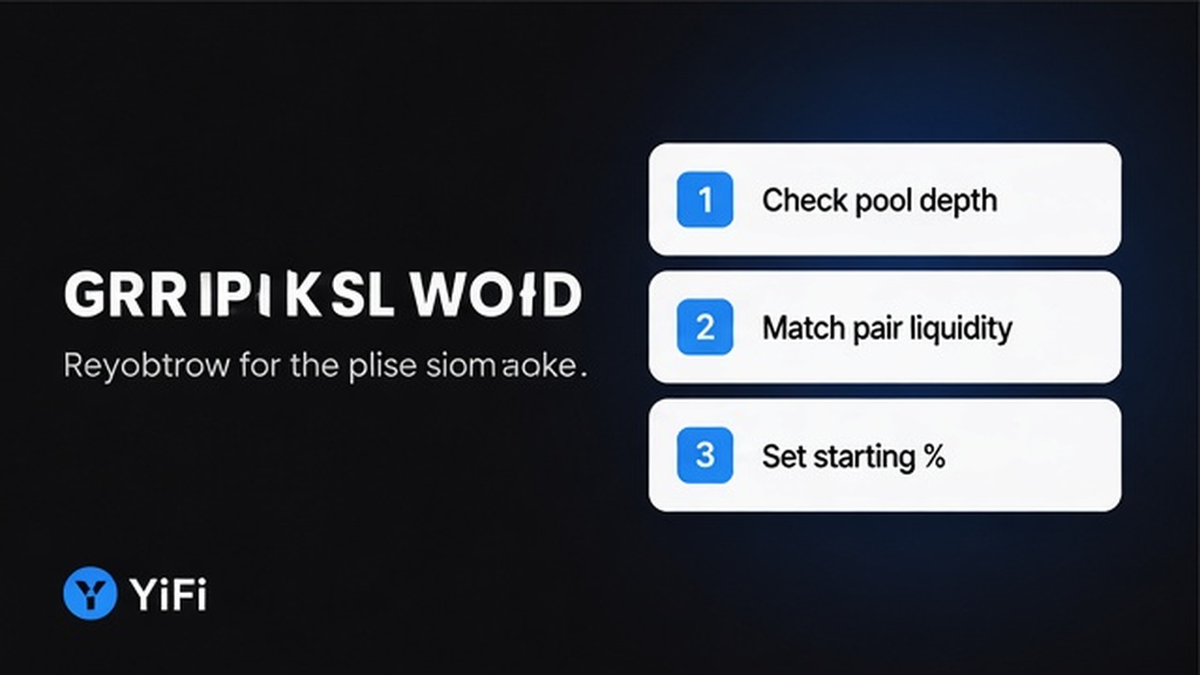
Start from how deep the pair is and how large your size is relative to that depth. Avoid copying a percent from the last meme trade.
| Pair / situation | Guidance from public sources (not a YiFi default) | What to do |
|---|---|---|
| Stables / deep majors | 1inch: often 0.1% or lower; CoW FAQ: roughly 0.25%-0.5% for stables | Start tight; requote if size vs depth looks off |
| Liquid majors (for example ETH) | 1inch: 0.5% is common; CoW FAQ: about 0.5%-2% | Use a mid band only if min received still feels fine |
| Thin / new / high-vol tokens | Uniswap blog: thin new-token pools may need 1% or more; CoW: volatile launches can need much higher with more risk | Raise only with eyes open, or shrink size |
Those bands come from Uniswap, 1inch, and CoW guidance. They are not a YiFi UI default. YiFi does not publish a single house slippage percent, and this article will not invent one. Uniswap’s blog also contrasts extremes: a thin new-token pool may need higher tolerance (for example 1% or more), while a deep stable pool on a large trade may use a very tight setting such as 0.05% – with more revert risk if you go too tight. If the UI offers auto slippage, treat it as a starting hint, not a free pass. CoW’s sandwich FAQ adds another public band: small liquid trades often sit around 0.5%-1%, while larger or illiquid trades may need 2%-3% to fill – still their FAQ wording, not YiFi policy.
Do: match the starting percent to liquidity and size. Don’t: leave a loose leftover setting from a previous thin-token swap on a deep stable trade.
Raise only for a named reason
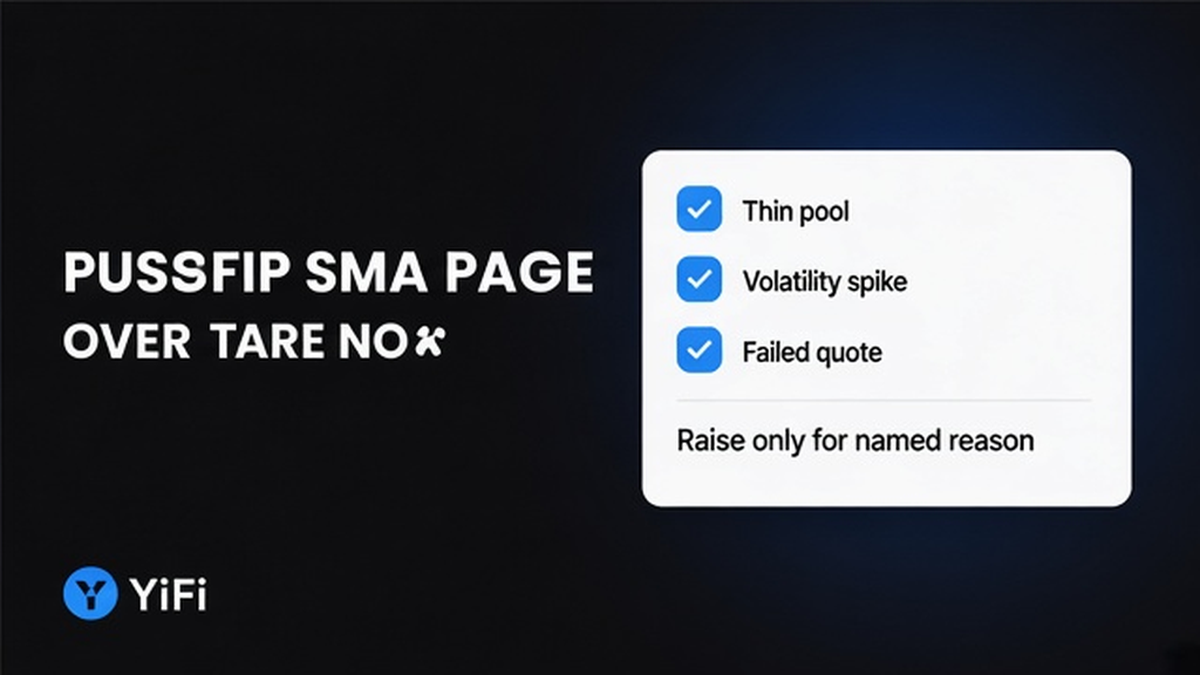
Raise tolerance only when you can name why the quote needs room:
- Thin pool relative to your size (large trade vs shallow liquidity).
- Known token tax or transfer fee that eats part of the output.
- A volatile moment where the market is moving while the tx waits.
- A route that already shows heavy price impact on the quote card.
Uniswap’s blog notes that large size against a thin pool shifts price more, and splitting into smaller chunks can help. 1inch says the same in plain language: if a swap only fills at a much higher percent, resize or split instead of raising the setting by habit. “So it goes through” is not a reason – it is how people donate the gap between quote and fill.
Do: bump with a written reason in your head, then re-check minimum received. Don’t: keep clicking higher until the button turns green without reading the new floor.
Cap loose tolerance: high slippage widens bad-fill and sandwich room
Price impact is what your order already does to the market. Slippage is extra drift while you wait for confirmation. 1inch warns that a high tolerance “announces how bad a fill you are willing to sign” for sandwich bots. CoW’s learn page states the hard ceiling metaphor: if your slippage tolerance is 2%, an attacker can extract up to 2% of your trade’s value via sandwich-style MEV on vulnerable routes.
YiFi’s homepage FAQ says Smart Routing can veil the transaction route and use chain mechanisms to reduce front-running / MEV exposure on large trades, and that it prefers deep, fast routes to minimize slippage. That reduces exposure. It does not make every percent free, and it does not promise “no MEV ever.”
Workflow: fresh quote → read min received → set or confirm tolerance → if floor looks bad, shrink size / split / requote → only then open the wallet prompt
Do: cap a loose setting when minimum received looks unacceptable; shrink size or split instead. Don’t: treat a high percent as insurance that always saves the trade – it can still revert, and on public-mempool AMM paths it widens extractable room.
Pre-sign checklist, then sign on Swap
Run this checklist every time before you confirm in the wallet:
- Confirm slippage tolerance matches the pair and size you just judged.
- Read minimum received again after any change to the percent.
- Check transaction deadline if the UI shows one (Uniswap SDK examples often use roughly twenty minutes – that is an SDK illustration, not a YiFi default).
- Scan route hops / provider labels; know whether you filtered DEX-only or allowed broader liquidity.
- Confirm destination asset, chain, and receive address.
- Sign only when the floor and route still match what you intend.
- If the swap later reverts on a tight setting, requote and diagnose – see how to troubleshoot a reverted crypto swap instead of blindly raising %.
Homepage FAQ also notes YiFi charges no additional platform fee on swaps; you still pay network gas and exchange/LP fees. Keep fee math separate from the slippage floor. Soft CTA: when the checklist is green, open YiFi Swap and sign with the tolerance you just defended – not the leftover percent from last night’s thin pool. One more habit: if volatility spikes mid-check, requote before you sign instead of widening the percent in a panic.
Do: treat the wallet prompt as the last gate after the checklist. Don’t: sign while settings, destination, or min received are still “probably fine.”
Frequently asked questions
What if the swap reverts on low slippage?
Requote with a fresh market, check size versus pool depth, then raise only with a named reason. If it already failed on-chain, follow the reverted-swap troubleshooting guide before you spam higher percents.
Is auto slippage safe on an aggregator?
Use auto as a starting point when the UI offers it, then still read minimum received. Auto is guidance, not a promise that the floor is acceptable for your size.
Does higher slippage always mean more MEV risk?
On public-mempool AMM routes, a higher tolerance widens the extractable window (CoW’s ceiling metaphor). Route design and veiling can reduce exposure, but no percent is “MEV-free.”
Minimum received vs slippage – which number decides?
Tolerance sets the rule; minimum received is the worst-case output you are agreeing to. Decide with the floor, not the estimated output alone (1inch pedagogy).
When should I raise vs resize the trade?
Raise for thin pools, known taxes, or real volatility with eyes open. If only a large percent would fill, shrink size or split the trade instead of cranking the setting by habit.
Can I skip this checklist on Telegram Mini App?
No. The Mini App uses the same routing logic. Apply the same min-received and tolerance checks before you confirm.