Injective (INJ): Building the Infrastructure for Onchain Finance

Injective is a Layer-1 blockchain built specifically for finance. Rather than positioning itself as a general-purpose network, Injective focuses on providing infrastructure for financial applications, including decentralized exchanges, derivatives, lending, tokenization, payments, and emerging AI-powered financial applications.
The project has continued to expand beyond its original DeFi focus. Today, Injective combines onchain financial infrastructure with interoperability, smart contracts, EVM compatibility, real-world asset tokenization, and institutional-oriented products.
What Is Injective?
At its core, Injective is an open and interoperable Layer-1 designed for the next generation of financial applications.
The network provides developers with a set of native financial primitives that can be used to build applications without creating every component from scratch. These include infrastructure for trading and markets, as well as tools for liquidity, interoperability, and smart contracts.
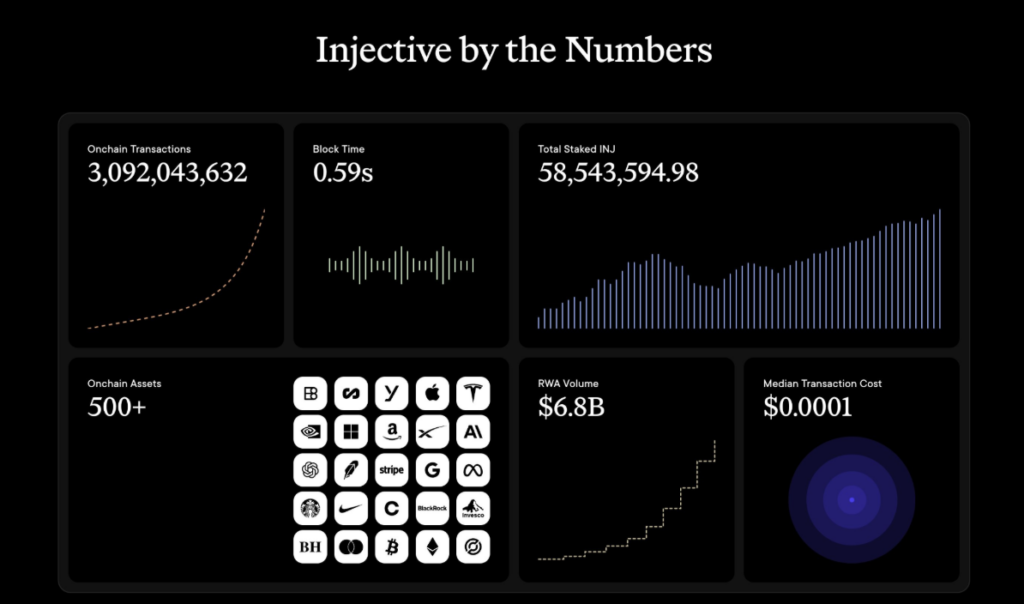
Injective uses a Proof-of-Stake consensus mechanism and is designed for fast transaction processing. The project currently highlights sub-second block times and transaction costs designed to remain low compared with many other major networks.
Another important part of Injective is interoperability. The network connects with ecosystems including Ethereum, Cosmos, and Solana, allowing applications built on Injective to interact with assets and users across different blockchain environments.
This focus on interoperability is especially important for financial applications, where liquidity and access to assets from different networks can directly affect the user experience.
Why Is Injective Focused on Finance?
Financial applications have specific requirements. Trading platforms need reliable market infrastructure, low transaction costs, fast execution, and access to liquidity. Lending and derivatives protocols require similar infrastructure but also need additional financial primitives.
Injective approaches this by making several of these components available at the blockchain level.
Its infrastructure includes a decentralized onchain orderbook designed to be MEV-resistant, native financial primitives, and interoperability tools. Developers can combine these components when building decentralized exchanges, derivatives platforms, lending protocols, prediction markets, and other financial applications.
The result is a blockchain where finance is not simply one of many possible use cases. It is the central design focus of the network.
From DeFi to RWA and AI
Injective has gradually expanded its focus beyond traditional DeFi.
DeFi and trading
Trading remains one of the most visible parts of the Injective ecosystem. Applications built on the network support spot markets, perpetuals, derivatives and other forms of onchain trading.
Beyond crypto-native markets, applications built on Injective can provide access to traditional financial markets through onchain derivatives and tokenized instruments. Examples include:
- Pre-IPO stocks: markets that provide exposure to private companies before they go public. Injective announced pre-IPO perpetual markets referencing companies such as OpenAI, SpaceX, Anthropic, and Perplexity.
- Public equities: onchain products linked to publicly traded companies. For example, the TradFi Index launched on Helix tracks a broad basket of major public equities through a single index product.
- Commodities: tokenized markets for assets such as gold and silver, bringing traditional commodity exposure into onchain finance.
- Foreign exchange (forex): currency markets, including EUR and GBP pairs introduced through Injective’s iAsset framework.
- Indices and specialized markets: index-based products such as the TradFi Index and AI Index perpetual markets, as well as more specialized markets tied to economic activity, such as H100 GPU-hour rental pricing.
The exact instruments available depend on the application and its current listings. These products may provide exposure through perpetual futures or other onchain structures, rather than direct ownership of the underlying asset.
Helix is one example. Injective describes it as its leading decentralized exchange, and the platform has processed more than $80 billion in volume according to Injective’s current website.
Real-world assets
Tokenization has become another major direction for Injective.
The network is being used to bring traditional financial assets and records onchain. In September 2026, Pineapple Financial announced that more than $1 billion in residential mortgage records had been moved onto Injective. Earlier, POSCO International and LG CNS selected Injective for a live trade receivables tokenization pilot.
Injective has also expanded its institutional infrastructure. In August 2026, Injective announced that Injective Institutional Services had become an SEC-registered transfer agent, marking another step in its work around regulated and tokenized financial markets.
AI and finance
Injective is also exploring how artificial intelligence can interact directly with onchain financial infrastructure.
One example is the Injective MCP Server, which allows compatible AI agents to interact with Injective’s onchain trading infrastructure through natural-language instructions. Agents can query active perpetual markets and funding rates, manage trading subaccounts, open or close positions, and monitor profit and loss.
Injective has also developed iAgent, an SDK for building AI agents that can interact with the Injective blockchain. Using large language models, these agents can turn natural-language requests into blockchain actions, making financial tools easier to use without requiring users to construct every transaction manually. Depending on how an agent is configured, examples include:
- Market analysis: query market information and use available data to support research or trading decisions.
- Trading actions: place market or limit orders across Injective-based decentralized exchanges.
- Wallet and fund management: check wallet balances, send payments, and manage funds through conversational commands.
Together, iAgent and the MCP Server illustrate two related parts of Injective’s AI strategy: tools for developers to build blockchain-connected agents, and infrastructure that lets compatible agents interact with onchain markets.
Injective EVM and MultiVM
Another important development is Injective’s expansion toward multiple virtual machines.
Injective has introduced Native EVM, allowing developers to use Ethereum-compatible tooling and Solidity while building on Injective. The broader MultiVM initiative is designed to support additional virtual machines and give developers more flexibility when deploying applications.
For developers, this means that building on Injective does not require abandoning familiar EVM development tools. At the same time, applications can access Injective’s native financial infrastructure and interoperability.
The Injective Ecosystem
Injective has an expanding ecosystem of applications covering different financial use cases.
Some notable examples include:
- Helix — a decentralized exchange built on Injective, focused on onchain trading and markets.
- Hydro Protocol — an Injective-native liquid staking and DeFi protocol.
- DojoSwap — an AMM-based decentralized exchange and one of the early native DeFi applications on Injective.
- Neptune — a lending protocol built on Injective.
The ecosystem also includes applications focused on derivatives, options, prediction markets, wallets, tokenization, and other financial use cases. Injective’s official website currently describes the ecosystem as containing more than 100 projects.
For users, Injective Hub acts as one of the main entry points into the ecosystem. It provides access to functions such as staking, governance, wallet management, the INJ BuyBack, and the Injective explorer.
What Is INJ?
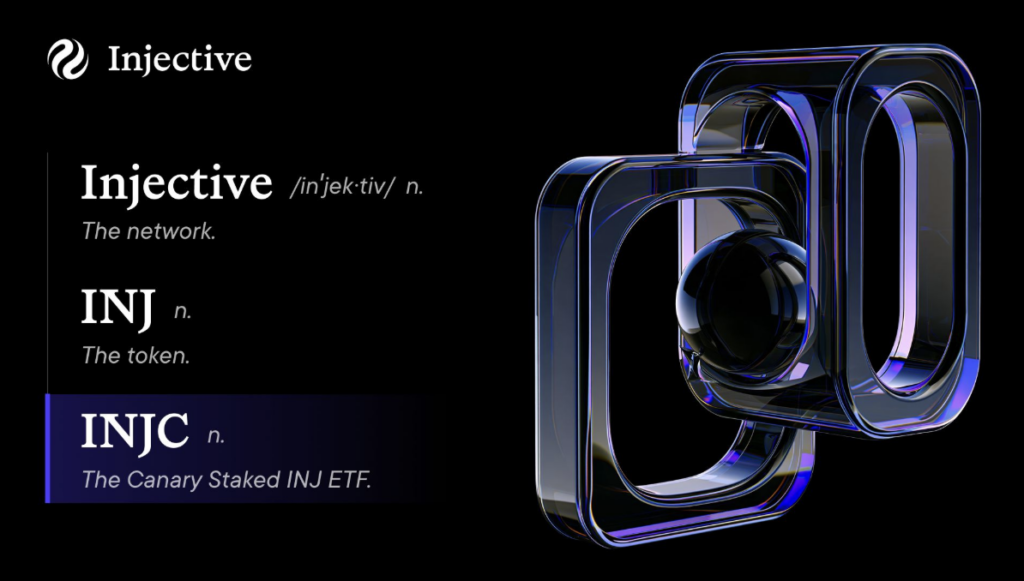
INJ is the native token of the Injective network.
The token has several functions within the ecosystem. INJ is used for staking and network security, governance, and participation in Injective’s token burn and buyback mechanisms. Injective also describes INJ as the native token of its onchain economy.
Staking allows INJ holders to participate in securing the Proof-of-Stake network while receiving staking rewards. INJ holders can also participate in governance and vote on proposals affecting the network.
INJ Tokenomics and the Community BuyBack
One of the notable parts of INJ’s current tokenomics is its supply model.
According to Injective, 100% of INJ is already in circulation, with no future unlocks, vesting schedules, or insider token releases.
Injective also operates a monthly Community BuyBack. Onchain revenue collected by the network is used to buy INJ from the open market, with the purchased tokens then permanently burned.
The official Injective website currently reports more than 7 million INJ burned through this mechanism. The number changes over time, so it should be treated as a live figure.
This creates a direct connection between network activity and the token’s supply: revenue generated by the ecosystem can be used to purchase INJ, while the purchased tokens are permanently removed from circulation.
What Is Happening With Injective Now?
Injective has continued to expand across several areas in 2026.
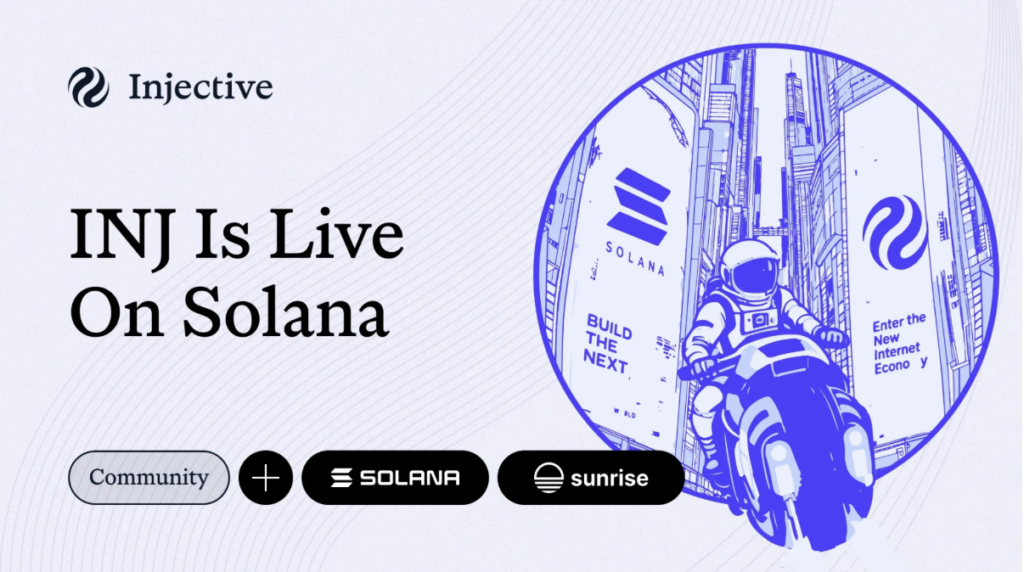
In September, INJ went live on Solana through Sunrise, with Raydium and StonkFun joining as day-one launch partners. The integration gives Solana users access to INJ while allowing developers to build new markets around the asset.
The project has also continued developing its RWA and institutional infrastructure. Recent announcements include the $1 billion mortgage-record tokenization by Pineapple Financial, the POSCO International and LG CNS trade receivables pilot, and the launch of Injective Institutional Services as an SEC-registered transfer agent.
At the same time, Injective continues to develop stablecoin payments, AI and agentic finance, EVM infrastructure, and its broader ecosystem. These developments show how the project is expanding from DeFi infrastructure toward a wider financial blockchain stack.
INJ Market Overview
As of October 12, 2026, CoinMarketCap lists INJ at approximately $8.05, with a market capitalization of around $805.3 million and approximately 99.97 million INJ in circulation. Its 24-hour trading volume is around $99.2 million, placing INJ at approximately #75 by market capitalization.
Market data changes continuously, so these figures should be updated before publication.
Swap INJ Through YiFi
INJ is also available for swaps through YiFi.
YiFi is a non-custodial swap platform that aggregates routes from connected providers, allowing users to access different exchange options through a single interface.
Users can select INJ and the asset they want to receive, review the available routes and rates, and complete the swap without having to manually search across multiple providers.
Swap INJ through YiFi and explore the available routes for your next exchange.
Subscribe: