Casper Network (CSPR): Blockchain for Real-World Assets, DeFi and the Machine Economy

Blockchain adoption is moving beyond purely crypto-native applications. As tokenized real-world assets, institutional blockchain infrastructure and autonomous AI systems continue to develop, blockchain networks increasingly need to support more complex requirements around security, compliance, usability and interoperability.
Casper Network is positioning itself around this shift. The Proof-of-Stake Layer 1 has evolved from an enterprise-focused smart contract platform into infrastructure designed for regulated real-world assets, decentralized finance and the emerging machine economy.
Its native token, CSPR, is used throughout the network for staking, transactions and interaction with the Casper ecosystem.
What Is Casper Network?
Casper is a decentralized, permissionless Layer 1 blockchain based on Proof-of-Stake consensus. The network launched its mainnet in March 2021 and has since gone through several major protocol upgrades.
Casper uses Zug Consensus, introduced with Casper 2.0. Zug is designed to provide deterministic finality while reducing the complexity and overhead of the network’s previous Highway consensus mechanism. Casper’s architecture also supports WebAssembly-based smart contracts and is being expanded toward multi-VM execution, including EVM compatibility. Casper Docs
One of Casper’s defining characteristics is its focus on upgradeable smart contracts. Instead of requiring developers to deploy an entirely new contract whenever business logic needs to change, Casper allows contract packages to be versioned and upgraded while preserving their state and history. Casper Docs
This approach is particularly relevant for businesses and applications that need to evolve over time, whether because of changing product requirements, new functionality or regulatory requirements.
Casper’s current direction is increasingly focused on three areas:
- Real-world asset tokenization and regulated markets
- Frictionless blockchain experiences for users
- AI agents and machine-to-machine payments
The network’s latest roadmap, the Casper Manifest, brings these areas together through initiatives including EVM compatibility, gasless transactions, smart accounts, compliant security tokens, transaction privacy, x402 micropayments and quantum-safe cryptography. Casper Network
Casper 2.0 and the Evolution of the Network
Casper 2.0 was one of the most important stages in the network’s development.
The upgrade introduced Zug Consensus, a new execution architecture and a number of protocol-level improvements designed to make Casper more predictable and adaptable for real-world applications.
Casper 2.0 also introduced native access controls and a foundation for multi-VM execution. The network later continued this development through Casper 2.1 and Casper 2.2.
Casper 2.1 reduced block time from 16 seconds to 8 seconds and introduced protocol-level fee burning. Casper 2.2 went live on March 23, 2026 and introduced additional changes to validator economics and network sustainability through community-approved governance proposals. Casper Network
The evolution is important because Casper is not treating its original architecture as fixed infrastructure. Protocol upgrades are being used to adapt the network toward new applications and markets.
Casper’s Focus on Real-World Assets
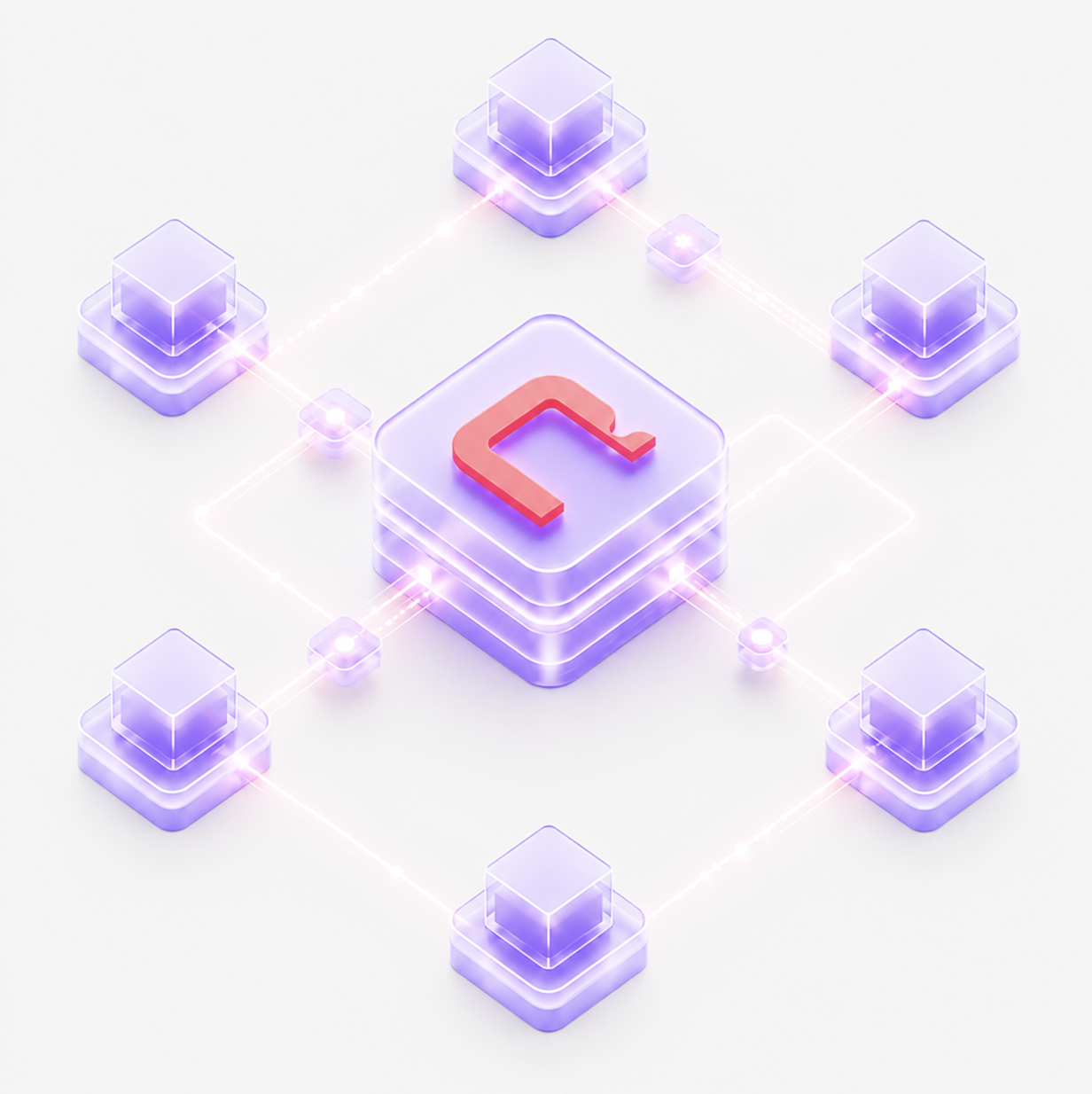
One of the strongest directions in the current Casper ecosystem is real-world asset tokenization.
The idea is to bring assets and financial instruments that exist outside blockchain infrastructure onto public networks while maintaining the controls required for institutional and regulated environments.
Casper’s roadmap specifically includes compliant security tokens, with ERC-3643 identified as one of the initiatives planned for the current development cycle. The network is also working on a Native Token Registry designed to make token operations more efficient while providing infrastructure that can support compliance-related functionality. Casper Network
The ecosystem already includes projects focused on this area.
AstralBeam, for example, is building cross-chain infrastructure for tokenized assets, connecting Casper with Ethereum, Base, Polygon and Robinhood Chain. The project is designed to provide a way for assets to move between Casper and other major blockchain ecosystems. Casper Network
Another example is Parking Blox, which has launched an MVP on Casper Mainnet. The project records real parking revenue on-chain, creating a verifiable record that can serve as infrastructure for tokenizing parking-related assets and cash flows. Casper Network
These projects illustrate the broader direction of Casper: blockchain infrastructure that can be connected to businesses and real economic activity rather than being limited to purely digital assets.
Casper DeFi and CSPR.trade
Casper’s DeFi ecosystem has also been developing rapidly.
One of the most important recent additions is CSPR.trade, a Casper-native decentralized exchange that went live on Mainnet. The DEX uses on-chain liquidity pools and allows users to trade tokens directly through the Casper ecosystem without giving up custody of their assets. Casper Network
CSPR.trade also provides liquidity providers with an opportunity to earn a share of trading fees by supplying assets to liquidity pools. Casper Network
Another important component is liquid staking.
Through Casper’s liquid staking infrastructure, users can stake CSPR while receiving sCSPR, a liquid representation of their staked position. This allows users to continue earning staking rewards while using their liquid-staked position in DeFi applications. Casper Network
Casper Delta is another example of the ecosystem expanding beyond basic swaps and staking. The platform offers perpetual trading functionality and emerged from the Casper hackathon ecosystem. Casper Network
Together, these products are helping build a more complete DeFi layer around CSPR.
Casper Wallet and the User Experience
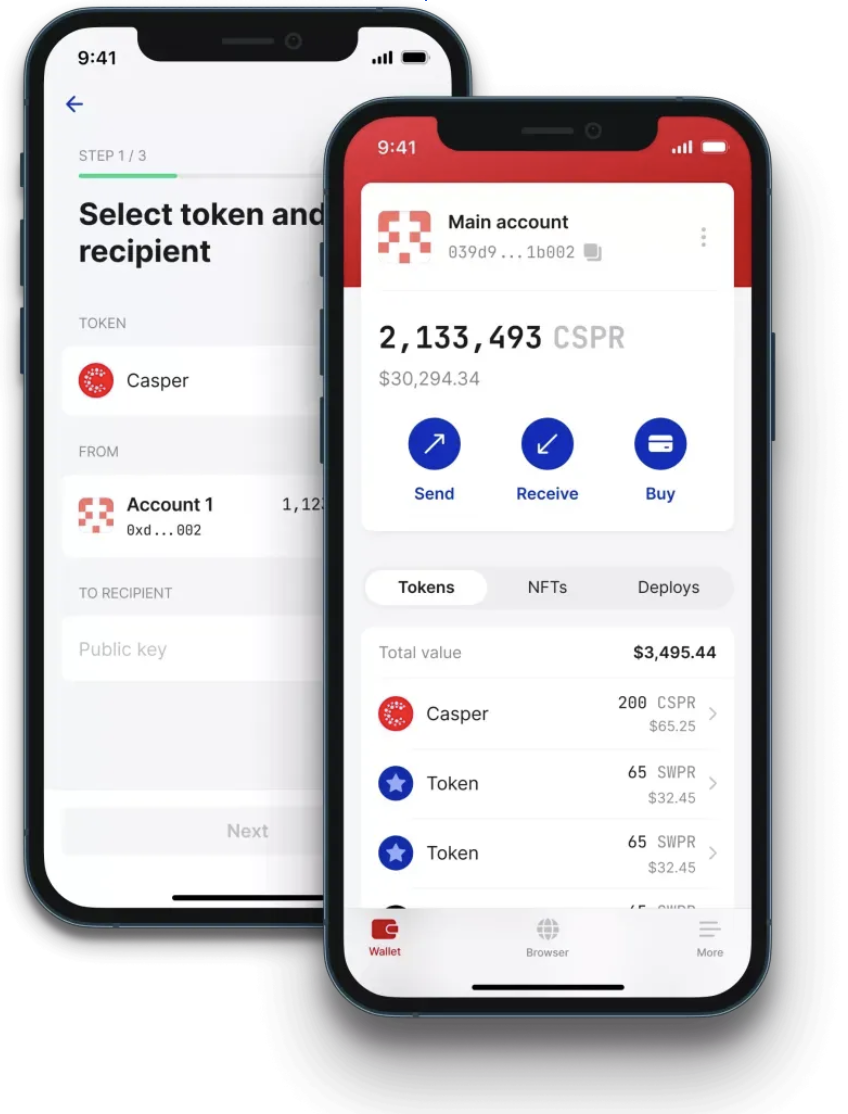
For users, Casper Wallet acts as one of the main entry points into the ecosystem.
CSPR holders can use their assets for transactions, staking, swapping and liquid staking. Casper Wallet is also connected to the wider ecosystem of Casper applications, allowing users to interact with DeFi and other Web3 products while keeping control of their assets. Casper Network
Casper is also working on improving the usability of blockchain addresses through CSPR.name.
Instead of using long hexadecimal account addresses, users can create human-readable names such as yourname.cspr. These names can be used across supported wallets and dApps, making transactions and on-chain identity easier to manage. Casper Network
Casper and the AI Economy
One of Casper’s most interesting recent developments is its focus on AI agents.
In June 2026, Casper launched its AI Toolkit, designed to allow AI agents to interact with blockchain infrastructure directly.
The toolkit gives agents the ability to make payments, access paid services, interact with DeFi protocols and even build and deploy smart contracts. Casper also introduced MCP-based tooling that allows AI systems to interact with blockchain functions through structured tool calls. Casper Network
The project is built around the idea that AI agents will increasingly become economic actors rather than simply software assistants.
For example, an autonomous agent could discover a service, pay for it through an x402-enabled payment flow, receive the required data and then trigger another blockchain transaction without requiring a human to manually approve every step.
This is one of the reasons machine-native payments have become a major part of Casper’s roadmap.
The Casper Manifest includes x402 micropayments as one of its core initiatives, alongside EVM compatibility, smart accounts, privacy and quantum-safe cryptography. Casper Network
CSPR: The Native Casper Token
CSPR is the native utility token of the Casper Network.
It is used for:
- Paying network transaction fees
- Staking and securing the network
- Participating in network operations
- Interacting with applications across the Casper ecosystem
- Using DeFi products and other on-chain services
Casper operates as a Proof-of-Stake network, with validators staking CSPR to participate in consensus. Users can delegate their CSPR to validators and receive a share of staking rewards without running a validator themselves. Casper Docs
Casper’s token economics have also evolved alongside the protocol. Following the Casper 2.2 upgrade, the network maintains an annual base inflation rate of 8%, with the updated allocation directing 6% toward validator rewards and 2% toward ecosystem development and operations. Casper Network
Because CSPR is used throughout the network, its utility is directly connected to the growth of Casper’s infrastructure, DeFi applications and emerging real-world asset and machine-economy use cases.
Recent Casper Developments in 2026
Several developments have made 2026 an important year for Casper.
The Casper Manifest
In May 2026, Casper published its multi-year technical roadmap, outlining nine major initiatives covering networking, EVM execution, native token infrastructure, gasless transactions, smart accounts, compliant security tokens, x402 payments, transaction privacy and quantum-safe cryptography. Casper Network
AI Toolkit
Casper launched its AI Toolkit in June, introducing infrastructure for AI agents to make payments, interact with DeFi and build on-chain applications. Casper Network
CSPR.trade Mainnet
CSPR.trade went live on Mainnet, adding a native non-custodial DEX and a new liquidity layer to the Casper ecosystem. Casper Network
CSPR on Kraken
In July 2026, CSPR became available to eligible U.S. users through Kraken and Kraken Pro, expanding access to the token in the U.S. market. Casper Network
AstralBeam and Tokenized RWAs
AstralBeam expanded Casper’s connectivity with major EVM networks, creating additional infrastructure for tokenized real-world assets to move across ecosystems. Casper Network
csprUSD
Casper is also about to introduce csprUSD, a stablecoin initiative aimed at supporting payments and the emerging machine economy. The project has positioned stablecoin infrastructure as an important component of Casper’s broader AI and machine-commerce strategy. Casper Network
CSPR Market Overview
As of October 5, 2026, CSPR is trading at approximately $0.00258.
According to CoinMarketCap, Casper has a market capitalization of roughly $44.6 million, with around 17.31 billion CSPR in circulation and approximately $2.5 million in 24-hour trading volume. CSPR is currently ranked around #425 by market capitalization. CoinMarketCap
Market data changes continuously, so these figures should be treated as a snapshot rather than a long-term assessment of the token.
Swap CSPR Through YiFi
CSPR is available for swaps through YiFi, giving users another way to access the Casper ecosystem through a non-custodial swap infrastructure.
YiFi aggregates swap routes from multiple connected providers, allowing users to compare available routes and execution options for supported assets.
For CSPR, the available route can depend on the selected pair, provider and current liquidity conditions. Users can review the available rate, route and expected receive amount before confirming a swap.
This gives CSPR holders an additional way to access liquidity outside the Casper-native ecosystem while keeping the process non-custodial.
The Bigger Picture
Casper has evolved significantly since launching its Mainnet in 2021.
The network now combines a Proof-of-Stake Layer 1, upgradeable smart contracts, deterministic finality, native staking and liquid staking, a growing DeFi ecosystem, cross-chain infrastructure and a roadmap focused on regulated assets and machine-native applications.
The recent launch of CSPR.trade, the AI Toolkit, AstralBeam and the Casper Manifest shows where the ecosystem is heading next: real-world assets, institutional blockchain infrastructure, DeFi and autonomous machine activity.
CSPR remains at the center of this ecosystem, serving as the network’s native asset for staking, transactions and interaction with applications built on Casper.
For users looking to explore the ecosystem, CSPR can also be swapped through YiFi alongside other supported assets and routes.
Subscribe: